Organic waste management is an essential aspect of sustainable living. In China, the variety of organic waste that can be composted is impressive. According to Dr. Li Wei, a distinguished expert in waste management, "Understanding what types of organic waste can be composted helps us reduce landfill use." His expertise highlights the potential of composting to transform waste into valuable resources.
Composting reduces waste and provides nutrient-rich soil. Common compostable materials include fruit and vegetable scraps, coffee grounds, and eggshells. Yard waste, like leaves and grass clippings, also plays a vital role. However, some waste is often misunderstood. For example, many people wonder if certain plant materials are suitable for composting.
Despite these benefits, challenges remain. Some individuals may hesitate to compost due to misconceptions about odor or pests. Proper education and awareness can help address these concerns. Encouraging composting can significantly contribute to environmental sustainability. Understanding what types of organic waste can be composted is a crucial first step in this journey.
Types of Organic Waste Commonly Found in China
In China, organic waste comprises a significant portion of municipal solid waste. According to recent reports, food scraps make up around 50% of total organic waste. This includes leftovers, vegetable peels, and expired products. Such waste can be effectively composted, turning a burden into valuable resources for soil enhancement.
Another common type of organic waste is garden waste, which includes grass clippings, twigs, and leaves. The Ministry of Ecology and Environment noted that around 30 million tons of garden waste are generated annually in urban areas. However, much of this waste still ends up in landfills. Lack of awareness and infrastructure hinders effective composting practices, even though they could significantly reduce landfill pressure.
Manure from farm animals also represents a crucial part of organic waste in rural China. According to a report by the National Bureau of Statistics, livestock manure generates over 5 billion tons annually. While it is a rich source of nutrients for composting, inadequate collection practices lead to environmental issues. Improving education and resources for composting can enhance organic waste management, turning challenges into opportunities for sustainability.
China Top Types of Organic Waste That Can Be Composted
| Type of Organic Waste |
Common Sources |
Composting Benefits |
| Vegetable Waste |
Fruits and vegetable markets, households |
Rich in nitrogen, improves soil health |
| Fruit Peels |
Supermarkets, households |
Adds organic matter, enhances microbial activity |
| Eggshells |
Households |
Calcium source, helps reduce acidity |
| Coffee Grounds |
Coffee shops, households |
High in nitrogen, aids in compost aeration |
| Leaves |
Gardens, parks |
Provides carbon, improves soil structure |
| Garden Waste |
Gardening, landscaping |
Rich in organic materials, enhances biodiversity |
Benefits of Composting Organic Waste
Composting organic waste offers numerous benefits that significantly contribute to environmental sustainability. When we compost, we reduce landfill waste and greenhouse gas emissions. Organic materials, such as vegetable peels and coffee grounds, easily break down and enrich the soil. This process restores nutrients and improves soil structure, promoting healthier plant growth.
Beyond soil health, composting boosts biodiversity. A rich compost supports beneficial microorganisms and earthworms, essential for thriving ecosystems. Still, not everyone realizes the effort it requires. Finding the right balance of greens and browns in your compost mix can be challenging. Some may overestimate how fast decomposition occurs, leading to frustration.
The educational aspect of composting is invaluable. It encourages individuals to understand waste management better. When people see the transformation from scraps to rich soil, it fosters a greater appreciation for the environment. Yet, many remain unaware of the specific types of organic waste suitable for composting. This lack of knowledge can prevent them from participating fully. Educating communities on this topic can bridge the gap, promoting an eco-friendlier lifestyle.
Top Types of Organic Waste That Can Be Composted in China
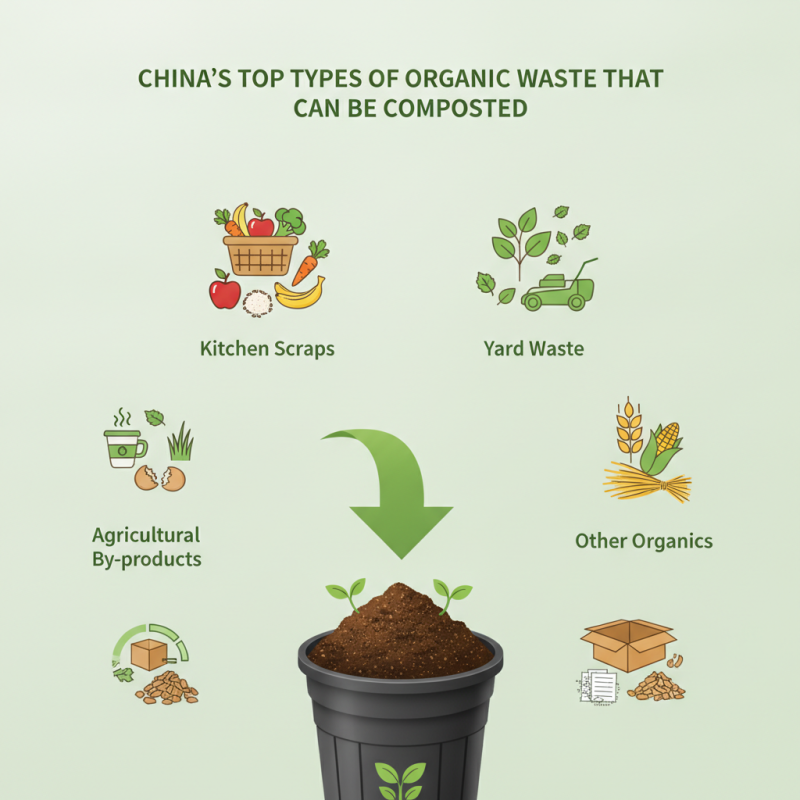
Composting is a vital part of waste management and environmental conservation. The chart below illustrates the most common types of organic waste that can be composted in China, highlighting the potential benefits of reducing waste and enriching soil health.
Methods for Composting Organic Waste in China
Composting organic waste has become a vital practice in China. Various methods are employed to turn kitchen scraps and garden waste into nutrient-rich soil. Each method has its benefits and challenges.
Aerobic composting is popular among urban households. It involves using a compost bin that requires air circulation. Regular turning is essential to maintain aerobic conditions. This method is efficient but can be time-consuming. In contrast, anaerobic composting requires less maintenance, as it involves keeping the waste sealed. However, it can produce odors if not monitored closely.
Tips for successful composting include reducing waste size. Chopping vegetables into smaller pieces accelerates decomposition. Balancing green and brown materials is crucial too. Greens provide nitrogen, while browns offer carbon. It's important to monitor moisture levels. Too much water can slow the process, while too little can hinder decomposition.
Another option is vermicomposting, which uses worms to break down food scraps. This method requires a worm bin and is ideal for small spaces. It can yield high-quality compost but may need a bit more knowledge to manage effectively. Be mindful of temperature and moisture to keep the worms healthy.
Challenges to Composting Organic Waste in Urban Areas
Urban areas in China face significant challenges when it comes to composting organic waste. First, space constraints hinder the establishment of composting facilities. Many cities are densely populated, leaving little room for large-scale composting operations. Land scarcity complicates efforts to process organic waste effectively.
Another critical issue is public awareness. Many residents lack knowledge about the benefits of composting. Society often views organic waste as mere trash rather than a resource. This mindset leads to low participation rates in composting programs. Educational initiatives are needed to promote the importance of composting.
Moreover, the varying quality of organic waste poses challenges. Different types of organic waste decompose at different rates. For example, kitchen scraps and yard waste require different composting methods. This inconsistency can result in incomplete composting. It often leads to unpleasant odors and pests, further deterring residents from engaging in composting. Addressing these complexities is essential for successful urban composting initiatives.
Future Trends in Organic Waste Composting in China
In recent years, organic waste composting has gained significant attention in China. The country produces over 400 million tons of organic waste annually. This includes food scraps, yard waste, and agricultural residues. Composting not only reduces landfill waste but also enriches soil, making it an essential practice for sustainable agriculture.
The future of organic waste composting in China appears promising. Government initiatives aim to increase composting rates dramatically. A report by the National Development and Reform Commission suggests that the composting rate could reach 35% by 2025. Technological advancements like anaerobic digestion are emerging. These methods can maximize waste recovery and improve the efficiency of composting processes.
Challenges remain, however. Public awareness of composting benefits is still low. Many urban residents lack knowledge of proper composting methods. Additionally, the infrastructure for large-scale composting facilities in rural areas is limited. Addressing these concerns is vital for achieving China’s composting goals. The next few years will be crucial in shaping an environmentally sustainable approach to waste management.
FAQS
: Composting reduces landfill waste, lowers greenhouse gas emissions, and enriches soil health. It promotes healthier plant growth.
Rich compost fosters beneficial microorganisms and earthworms, helping create thriving ecosystems and enhancing soil life.
Many struggle to balance greens and browns. Some overestimate decomposition speed, leading to disappointment in results.
It helps people understand waste management and encourages environmental appreciation. Seeing scraps turn to soil is transformative.
Not everyone knows which organic waste to compost. Lack of knowledge can limit participation in composting initiatives.
This method uses a compost bin and needs air circulation. Regular turning is necessary, but it requires more time.
Anaerobic composting involves sealed waste, needing less maintenance. However, it can produce unpleasant odors if neglected.
Chop vegetables into smaller pieces, balance greens and browns, and monitor moisture levels to enhance decomposition.
Vermicomposting uses worms to break down food scraps. It requires a worm bin and is great for small spaces.
Keep an eye on temperature and moisture levels to ensure worms stay healthy and successfully break down waste.
Conclusion
In China, understanding what types of organic waste can be composted is essential for effective waste management. Common organic waste includes kitchen scraps, yard waste, and agricultural residues, which can significantly contribute to composting efforts. The benefits of composting such waste range from reducing landfill use to enhancing soil health.
Despite these advantages, urban areas face challenges, including limited space and public awareness about composting methods. Various composting techniques, such as home composting and community composting initiatives, are gaining traction. Looking ahead, there is a growing trend towards integrating composting practices into urban planning, which may address current challenges and promote sustainability in managing organic waste.

 AgBio Energy