How to Turn Organic Waste into Valuable Compost Easily?

Time:2026-06-03 Author:Ethan
0%

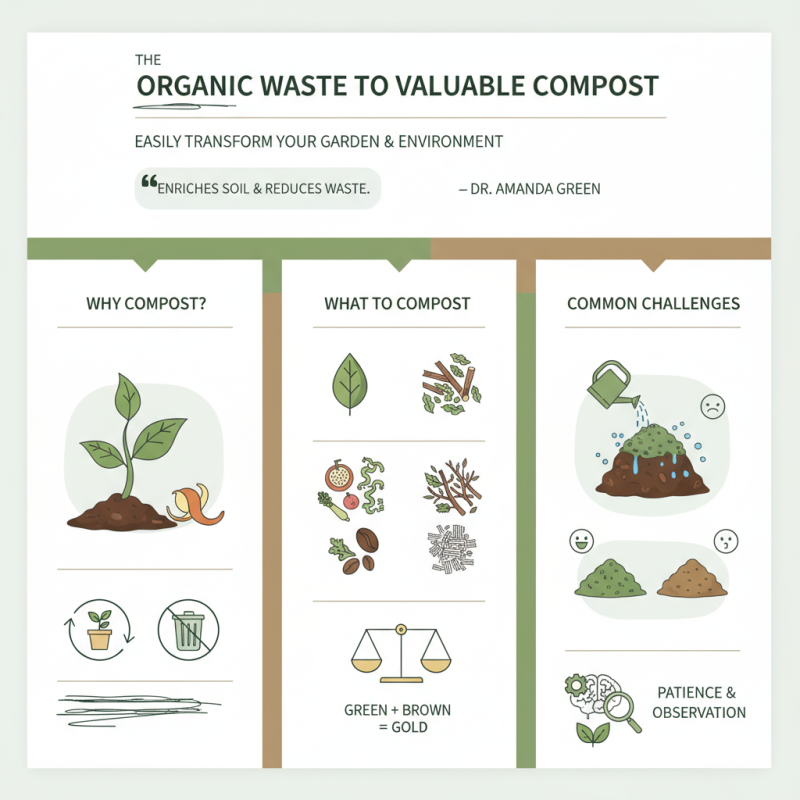
Turning organic waste into valuable compost is a crucial step towards sustainability. Dr. Amanda Green, a leading expert in soil science, emphasizes, "Composting not only enriches the soil but also reduces waste." Understanding how to turn organic waste into valuable compost can transform your garden while benefiting the environment.

Many households generate organic waste daily, often discarding it without thought. This waste includes fruit peels, vegetable scraps, and yard clippings. By composting, you can recycle this waste into nutrient-rich compost. The process may seem overwhelming, but it is straightforward and rewarding.

Still, many people face challenges in their composting journey. A common mistake is adding too much moisture or not balancing green and brown materials. Reflecting on these pitfalls can lead to better practices. Learning how to turn organic waste into valuable compost requires patience and observation. Each attempt teaches what works best for you and your garden.
How to Turn Organic Waste into Valuable Compost Easily?

Understanding Organic Waste and Its Benefits for Composting

Organic waste includes food scraps, yard trimmings, and paper products. Understanding this material is vital for effective composting. Composting transforms these items into nutrient-rich soil, which benefits gardens and plants.

The benefits of composting organic waste are significant. It reduces landfill waste, decreases greenhouse gas emissions, and enhances soil health. However, not all organic waste is suitable for composting. Items like dairy and meat can attract pests. Knowing what to include is essential for a successful composting process.

Composting requires balance and patience. It’s common to encounter challenges, such as odor issues and slow decomposition. Regularly turning the pile and maintaining moisture can help. Learning from these experiences makes you a better composter. As you gain knowledge, the process will become easier and more rewarding over time.

Essential Materials Needed for Effective Composting Process

To successfully turn organic waste into valuable compost, specific materials are crucial for the composting process. Kitchen scraps such as vegetable peels, fruit cores, and coffee grounds are excellent sources of nitrogen. According to the Environmental Protection Agency (EPA), approximately 30% of what we throw away could be composted. This statistic highlights the potential for reducing landfill waste while producing nutrient-rich compost.

It's essential to balance carbon-rich materials with nitrogen sources. Brown materials like dried leaves, cardboard, and straw contribute carbon, which is vital for healthy microbial activity. The ideal ratio is about 3 parts brown to 1 part green materials. Failing to maintain this balance can slow down the composting process. For instance, too much nitrogen can create a smelly pile, while too much carbon may lead to a dry, slow decomposition.

The moisture level also plays a critical role. Compost should feel like a damp sponge. Too much moisture can lead to anaerobic conditions, producing foul odors. Regular turning of the pile enhances aeration, promoting faster decomposition. Monitoring these essential factors will help in creating quality compost. Each step in this process requires careful attention and patience.

Step-by-Step Guide to Creating Your Own Compost Pile

Creating your own compost pile is an easy but rewarding task. Begin by collecting organic waste from your kitchen. Fruit and vegetable scraps work well. Avoid meat and dairy, as they can attract pests. Paper and yard waste are also great additions. Layering these materials helps with airflow. Aim for a mix of greens and browns for the best results.

Next, choose a location. A dry, shaded area is ideal. You don’t need fancy equipment—just a space to pile your waste. Turn the pile regularly to speed up decomposition. This can be a physical challenge. Be prepared to get your hands dirty! Over time, you may notice odors. This is a sign to adjust your mix or turn the pile more frequently.

Patience is key. Compost can take several months to form. You may experience setbacks along the way. Maybe your pile smells or is too dry. Learn from these mistakes. Regular monitoring and adjustments will help you produce rich, valuable compost. It’s a learning journey, and each attempt gets you closer to success.

Maintaining the Right Conditions for Optimal Composting

Creating the right environment for composting is crucial. Moisture, temperature, aeration, and the carbon-to-nitrogen ratio significantly impact compost quality. A study by the U.S. Environmental Protection Agency suggests maintaining a moisture level of about 40-60%. Too much water leads to anaerobic conditions, while too little slows decomposition.

Temperature is also key. The ideal range for composting is between 130°F to 150°F (54°C to 66°C). This heat helps kill pathogens and seeds. Regular turning of your compost pile enhances aeration. The Composting Council states that turning every 4-6 weeks can boost decomposition speed. However, not everyone has the time or energy for this routine.

Monitoring the carbon-to-nitrogen ratio is essential as well. Ideally, it should be about 30:1. Too much carbon from dry leaves can slow down the process. Conversely, too much nitrogen can create a foul smell. Thus, balancing these elements requires attention and adjustment, making composting a dynamic process.

Using Finished Compost: Tips for Application in Gardening

Utilizing finished compost in your garden can significantly enhance soil health and plant growth. Compost provides essential nutrients and improves soil structure. It retains moisture and encourages beneficial organisms. However, improper application can lead to less-than-desirable results.

When applying compost, aim for a thin layer about half an inch thick. This method helps prevent nutrient leaching. Use a rake to spread it evenly. Be cautious not to smother existing plants. Too much compost can hinder their growth.

Try mixing compost into your garden beds during fall or spring. This allows the nutrients to integrate into the soil. Ensure you test your soil first. Sometimes, soil conditions might not need additional organic matter. Regular testing helps maintain balance.

Pay attention to the types of plants you have. Some may thrive on compost, while others may not respond well. Observe your plants' growth and adjust your compost application accordingly. An organic approach is beneficial, but it requires regular monitoring and adjustments.

FAQS

: What is organic waste?

: Organic waste includes food scraps, yard trimmings, and paper products. These materials are essential for composting.

Why should I compost?

Composting reduces landfill waste and greenhouse gas emissions. It enhances soil health, which benefits your garden.

Can I compost all organic waste?

No, avoid composting meat and dairy. These items attract pests and can disrupt the composting process.

How do I start a compost pile?

Collect fruit and vegetable scraps. Layer them with yard waste and paper. Aim for a balance of greens and browns.

Where should I place my compost pile?

Choose a dry, shaded area for your pile. A simple space is enough; no fancy equipment is needed.

How often should I turn my compost pile?

Turn your pile regularly to speed up decomposition. This helps avoid odors and improves airflow.

What if my compost pile smells?

A smelly pile indicates an imbalance. Consider adjusting your mix or turning the pile more frequently.

How thick should I apply compost in my garden?

Apply a thin layer, about half an inch thick. This helps prevent nutrient leaching and protects plants.

Can all plants benefit from compost?

Not all plants respond well to compost. Observe their growth and adjust your application accordingly for the best results.

How long does it take to make compost?

Composting can take several months. Be patient and learn from setbacks to improve the process over time.

Conclusion

Transforming organic waste into valuable compost is not only an environmentally friendly practice but also a fulfilling way to improve your gardening experience. To successfully learn how to turn organic waste into valuable compost, it's essential to first understand the types of organic waste suitable for composting, which provide numerous benefits to soil health. By gathering essential materials such as green waste, brown waste, and a proper balance of nitrogen and carbon sources, you can initiate an effective composting process.

Following a step-by-step guide, you can create your compost pile with the right combination of materials and methods. Maintaining ideal conditions, including moisture and aeration, will lead to optimal composting. Finally, utilizing the finished compost in your gardening efforts can significantly enhance plant growth and soil vitality, underscoring the importance of recycling organic waste and enriching the earth.

Ethan

Ethan

Ethan is a seasoned marketing professional with a deep expertise in our company's innovative product line. With a passion for sharing knowledge and insights, he takes the lead in regularly updating our corporate blog, where he explores industry trends, product features, and effective marketing......