China Best Composting Solutions Why Is Composting Important?

Time:2026-10-21 Author:Henry
0%

China’s best composting solutions begin with a simple question: why is composting important for waste management? Food scraps, leaves, and agricultural residues often fill valuable landfill space. When separated correctly, these materials can become a useful soil amendment instead of becoming wasted resources.

Composting supports cleaner cities and more resilient farms. A household caddy may collect vegetable peels, coffee grounds, and eggshells each day. In a community facility, controlled airflow, moisture, and temperature help microorganisms break down this organic matter. Well-managed compost can improve soil structure, support water retention, and reduce dependence on some synthetic inputs. These benefits explain its growing role in China’s waste reduction strategies.

Practical experience also reveals limitations. Contaminated organic waste can produce poor-quality compost. Plastic fragments, excessive moisture, and unsuitable materials remain common problems. Composting is not effortless. It requires source separation, trained operators, clear collection systems, and regular testing. Facilities should monitor odor, pathogens, maturity, and heavy metals before distributing finished compost. Local climate and waste habits also affect the right solution. A small apartment building may need sealed aerobic bins, while a rural project may use windrows or enclosed equipment.

The strongest approach combines public education, reliable technology, and measurable results. Residents need simple instructions near collection bins. Operators need documented procedures and maintenance records. Policymakers need evidence from local trials, not attractive promises alone. Composting may not solve every waste problem, but it can turn a visible daily burden into a practical resource. Small improvements matter. Mistakes should be studied, corrected, and openly reported.
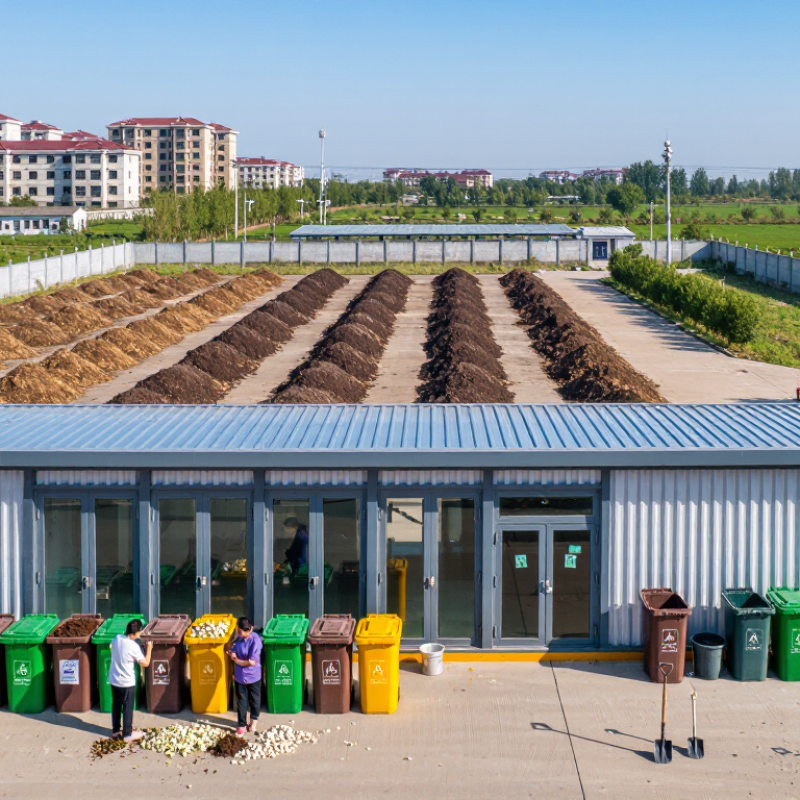
China Best Composting Solutions Why Is Composting Important?

What Is Composting and How Does It Work?

Composting is the controlled decomposition of organic materials into a dark, earthy soil amendment. Food scraps, dry leaves, grass, and coffee grounds can become useful compost instead of household waste. Tiny organisms, including bacteria and fungi, feed on these materials and release heat. Oxygen, moisture, carbon, and nitrogen guide the process. That balance matters. A pile that smells rotten usually lacks air or contains too much wet material.

A practical compost pile needs a mixture of browns and greens. Browns include shredded cardboard, dry leaves, and small branches. Greens include vegetable peelings, fresh grass, and plant trimmings. A handful of damp material should feel like a wrung-out sponge. Turn the pile occasionally so oxygen reaches the center. If it becomes dry, add water slowly. If it becomes soggy, add dry carbon materials. Visible steam can show active decomposition, but heat alone does not prove finished compost.

With suitable conditions, many piles mature within several months, although weather and particle size change the timeline. Finished compost looks dark, crumbly, and earthy, with few recognizable scraps. It can improve soil structure, support moisture retention, and return nutrients to gardens. Yet composting is not effortless. Fruit flies, odors, or slow breakdown may expose poor mixing or unsuitable inputs. A smaller, well-managed pile is often better than a large neglected one. Testing a small batch reveals what local climate and materials require.

Why Is Composting Important?

Global food waste by sector in 2022, measured in million tonnes

Approximately 1.05 billion tonnes of food were wasted globally in 2022. Households generated the largest share, followed by food service and retail. Composting can return nutrients and organic matter to soil while reducing the amount of biodegradable waste sent to landfill, where it can produce methane during decomposition.

Why Is Composting Important for People and the Environment?

Composting turns food scraps and yard waste into a useful soil amendment. In my experience, a small kitchen caddy makes this habit easier. Vegetable peels, coffee grounds, dry leaves, and crushed eggshells can become valuable organic matter. Composting also reduces the waste sent to landfills, where wet materials may produce methane as they decompose without enough oxygen. That matters for climate protection and cleaner waste systems.

Healthy compost needs a balance of “greens” and “browns.” Greens include fruit scraps and fresh grass. Browns include cardboard, straw, and dry leaves.

Keep the pile damp, like a squeezed sponge. Turn it occasionally so air can enter. Too much food waste causes odors. Too many dry materials slow the process. It is not magic. Small mistakes are normal.

For people, composting can lower household waste and improve gardening results. Mature compost helps soil hold water, which can reduce frequent watering. It also supports earthworms and beneficial microorganisms. Families can watch these changes directly, especially in a shared garden or community composting area.

However, compost should not include meat, dairy, oily food, pet waste, or diseased plants unless the system is professionally managed. I sometimes find “simple” composting advice too general. Local weather, container size, and daily habits all change the result. A shaded, ventilated bin may work better in a hot city than an uncovered pile.

Which Composting Methods Are Commonly Used in China?

China Best Composting Solutions: Why Is Composting Important?

Which Composting Methods Are Commonly Used in China?

China uses several composting methods, selected according to climate, land, waste quality, and local budgets. Aerobic windrow composting remains practical for parks, farms, and large organic-waste sites. Workers turn long piles regularly, allowing oxygen to control moisture, heat, and odors. In-vessel composting offers tighter control in crowded cities. It uses enclosed drums or containers, reducing exposure to rain and pests. The China Statistical Yearbook 2023 recorded more than 240 million tonnes of urban household waste treated in 2022. Even a small organic fraction creates a large management challenge.

Anaerobic digestion is also expanding for food waste. Strictly speaking, it produces biogas and digestate rather than traditional compost. However, the digestate can support soil improvement after proper treatment and testing. Vermicomposting suits schools, community gardens, and small farms. Earthworms process vegetable scraps slowly, producing a fine, dark material. It looks simple, but contaminated feedstock can ruin the process. The World Bank’s What a Waste 2.0 report projects global municipal waste could reach 3.4 billion tonnes annually by 2050. China’s experience shows that equipment alone is not enough. Source separation, temperature records, moisture checks, and trained operators determine real performance. This part is often underestimated. Even well-designed systems may struggle when residents mix plastic bags with kitchen waste. Industry guidance from the Ministry of Housing and Urban-Rural Development therefore emphasizes separated collection and controlled treatment, not composting in isolation.

China Best Composting Solutions: Why Is Composting Important? - Which Composting Methods Are Commonly Used in China?

Composting Method Typical Feedstock in China Oxygen Management Typical Active Composting Time Typical Temperature Range Main Advantages Main Limitations Common Application
Open Windrow Composting Municipal green waste, crop residues, livestock manure, and separated food waste Natural airflow supported by periodic mechanical turning 8–16 weeks, followed by curing Approximately 45–70°C during the active phase Simple operation, relatively low capital cost, and suitable for large land areas Requires space; odor, leachate, dust, and weather control must be managed Agricultural areas and large-scale organic waste treatment sites
Forced-Aerated Static Pile Food waste, garden waste, manure, and agricultural by-products Air supplied through perforated pipes or aeration floors; turning may be reduced 4–10 weeks of active treatment, plus curing Approximately 50–70°C when moisture and airflow are balanced Better odor control and faster treatment than unmanaged piles; less physical turning Needs fans, pipes, monitoring, and careful control of moisture and porosity Medium- and large-scale facilities with controlled collection systems
In-Vessel Composting Separated kitchen waste, food-processing residues, municipal organic waste, and manure Mechanically controlled airflow, mixing, temperature, and moisture 2–6 weeks in the reactor, followed by external curing Typically maintained around 55–65°C for hygienic treatment Small footprint, rapid processing, and improved control of odor and leachate Higher capital and operating costs; requires trained operators and regular maintenance Urban areas, transfer stations, and facilities with limited land availability
Vermicomposting Pre-composted food waste, plant residues, animal manure, and low-salt organic materials Passive aeration through porous bedding and regular material management 6–12 weeks, depending on feedstock and worm density Usually about 15–30°C; excessive heat can harm earthworms Produces fine, biologically active vermicompost with relatively low energy demand Sensitive to high temperatures, toxic materials, excess moisture, and high salinity Small farms, schools, community projects, and specialized agricultural production
Small-Scale Aerobic Bin or Pile Household kitchen scraps, leaves, garden trimmings, and small amounts of untreated manure Passive airflow with occasional manual mixing 2–6 months, depending on particle size, moisture, and turning frequency Often 35–60°C when the mixture is well balanced Low cost, easy to implement, and suitable for source-separated organic waste Limited capacity and less consistent temperature, moisture, and pathogen control Households, rural communities, gardens, and educational projects
Why Composting Is Important
  • Diverts biodegradable waste from landfills and reduces the formation of landfill methane under anaerobic conditions.
  • Recycles carbon and nutrients into a stable soil amendment instead of losing organic matter through disposal.
  • Improves soil structure, water-holding capacity, aeration, and resistance to erosion when mature compost is properly applied.
  • Supports nutrient management by returning organic matter and plant nutrients to agricultural soils.
  • Can reduce the need for part of the mineral fertilizer input, although compost nutrient content varies by feedstock and treatment.
  • Helps control organic-waste odors and hygiene risks when adequate aeration, moisture, and thermophilic conditions are maintained.

Note: The figures shown are general operating ranges reported for aerobic composting systems. Actual performance depends on feedstock composition, carbon-to-nitrogen ratio, moisture content, particle size, aeration, climate, and curing conditions.

What Makes China’s Best Composting Solutions Effective?

China’s best composting solutions are effective because they fit local waste conditions, climate, and land use. A coastal city may receive wet kitchen scraps, while an inland facility handles drier yard residues. The equipment must adapt. It cannot rely on one fixed recipe. Operators measure moisture, oxygen, temperature, and carbon balance during active composting. A practical target is often moisture near 50–60%, though feedstock changes the result. Piles should feel damp, not muddy. Good airflow reduces odors and supports aerobic microbes. This sounds simple. It is not.

Effective facilities also begin with cleaner source separation. Food waste mixed with glass or batteries can damage equipment and reduce compost quality. Screening, magnets, and manual checks remove visible contaminants. Enclosed receiving areas help control flies and odors. Covered floors and drainage channels collect leachate before it reaches soil or water. Trained workers record temperature readings across the pile, not just at the surface. Heat must reach appropriate levels for reliable sanitation, then the material needs curing. Rushing this stage can leave unstable compost with a sharp smell.

China’s strongest approaches connect treatment with nearby farms, gardens, and soil improvement projects. Testing for maturity, moisture, salts, and contaminants supports safer application. Local standards and independent sampling add credibility. Still, no system is perfect. Seasonal rain can upset moisture control, and small facilities may lack skilled staff. A low-cost process may look efficient until odors trigger complaints. Regular maintenance, transparent records, and honest review matter as much as machinery. Sometimes the best improvement is slower feeding and better sorting.

How Can Communities Choose and Implement Composting Solutions?

Communities should choose composting solutions around local habits, not impressive equipment. A practical decision starts with a waste audit. For one week, residents can record food scraps, garden waste, and discarded packaging. This evidence shows the likely volume and contamination level. Local climate, housing density, and collection distances also matter. A rural area may use shared composting sites. An apartment district may need sealed indoor bins and frequent pickup. Convenience matters more than slogans.

Before a full rollout, planners can test the system in one neighborhood. Place small, clearly labeled containers near kitchens and larger bins beside existing waste stations. Use simple instructions with pictures. Train building staff, collection workers, and community volunteers together. Measure participation, contamination, odors, missed collections, and resident complaints. These details reveal problems early. Keep the trial long enough to include holidays and hot weather.

Implementation needs reliable funding, safe operating procedures, and clear responsibility. Communities should publish collection schedules and explain how finished compost will be used. They should also provide accessible options for older residents and people without private gardens. Mistakes are normal. In one pilot, residents used compostable liners incorrectly, causing sorting delays. More demonstrations helped, but not everyone changed immediately. That result deserves attention, not blame. Monthly feedback meetings can adjust bin locations, collection frequency, and educational materials. Local health and waste authorities should review the process before expansion.

FAQS

What is composting?

Composting is the controlled breakdown of organic materials into dark, crumbly soil amendment. Tiny organisms use oxygen, moisture, carbon, and nitrogen. It takes time.

Which materials can go into a compost pile?

Suitable materials include vegetable peels, coffee grounds, dry leaves, grass, cardboard, and small branches. Mix fresh “greens” with dry “browns.” Balance matters.

How wet should compost be?

The material should feel like a wrung-out sponge. Add water slowly when the pile feels dry. Add dry leaves or cardboard when it becomes soggy.

Why does compost sometimes smell rotten?

A rotten smell usually means poor airflow or excessive wet material. Turn the pile and add dry carbon materials. I sometimes underestimate how quickly food scraps become soggy.

How long does composting take?

Many piles mature within several months. Weather, material size, moisture, and turning change the timeline. Smaller pieces usually break down faster, but not always.

How can someone recognize finished compost?

Finished compost looks dark, crumbly, and earthy. Few original scraps remain visible. Steam only shows activity, not completion.

What materials should usually stay out of household compost?

Avoid meat, dairy, oily food, pet waste, and diseased plants unless professionals manage the system. These materials can create odors, pests, or safety concerns. Simple advice has limits.

How can a community start a composting program?

Begin with a one-week waste audit. Record food scraps, garden waste, packaging, and contamination. Test one neighborhood before expanding.

What makes a community composting system practical?

Use clearly labeled containers, picture-based instructions, regular pickup, and trained staff. Consider climate, housing density, collection distance, and accessibility. Convenience beats slogans.

Conclusion

Composting is a natural process that transforms food scraps, garden waste, and other biodegradable materials into nutrient-rich organic matter. By balancing carbon-rich and nitrogen-rich materials with air, moisture, and suitable conditions, microorganisms break down waste and produce useful compost. Understanding why is composting important for waste management helps explain its value: composting reduces the amount of waste sent to landfills, lowers unpleasant odors and emissions, improves soil structure, and returns nutrients to the land.

In China, commonly used methods include household composting, community composting, centralized facilities, and systems designed for agricultural or urban organic waste. Effective composting solutions are practical, adaptable, easy to maintain, and suitable for local waste volumes and climate conditions. Communities can begin by assessing their waste sources, selecting an appropriate method, educating residents, separating organic materials, and monitoring moisture, airflow, cleanliness, and compost quality. With consistent participation and responsible management, composting can support cleaner communities, healthier soil, and more efficient resource use.

Henry

Henry

Henry is a dedicated marketing professional with a profound expertise in the company's offerings. With years of experience in the industry, he possesses an impressive understanding of the market dynamics and consumer behaviors that drive success. Henry is committed to sharing his insights through......