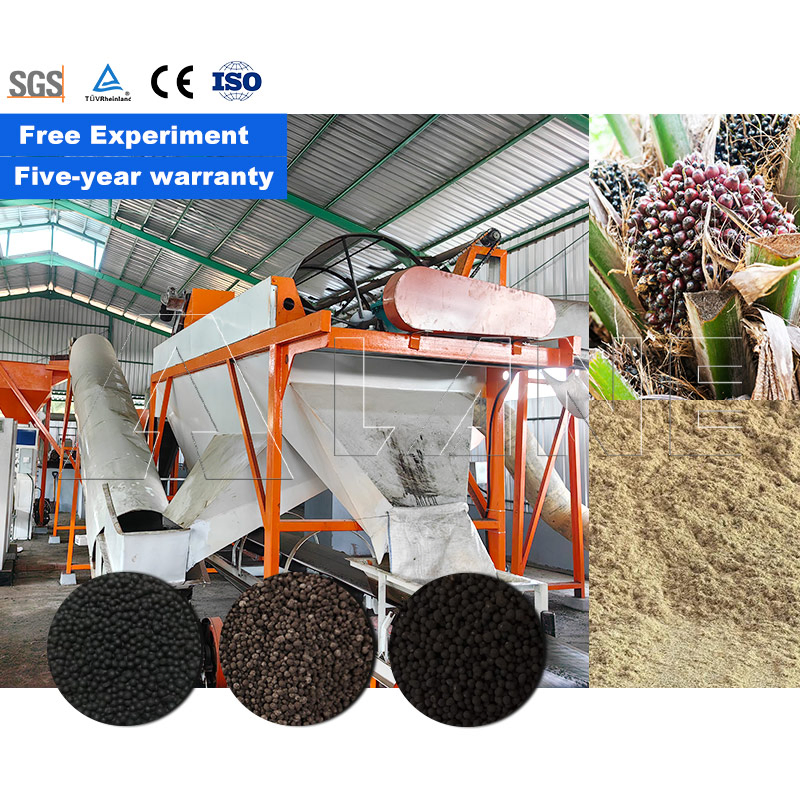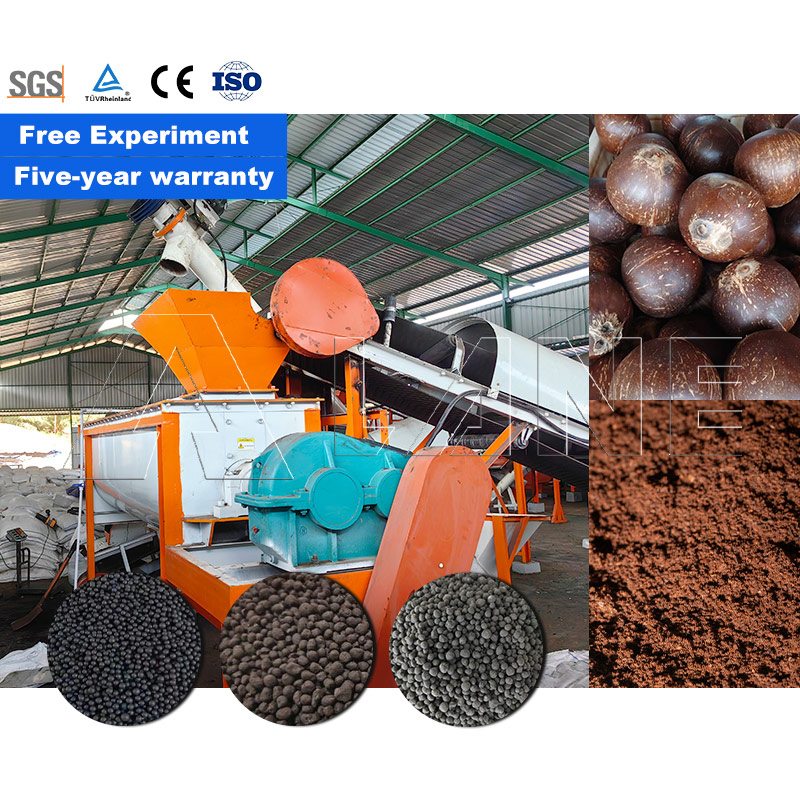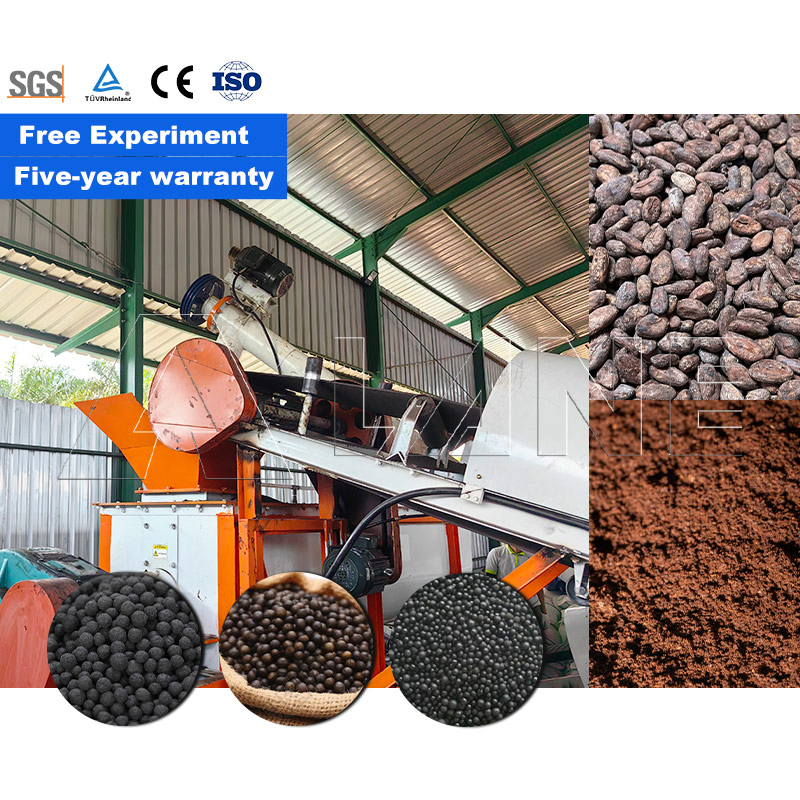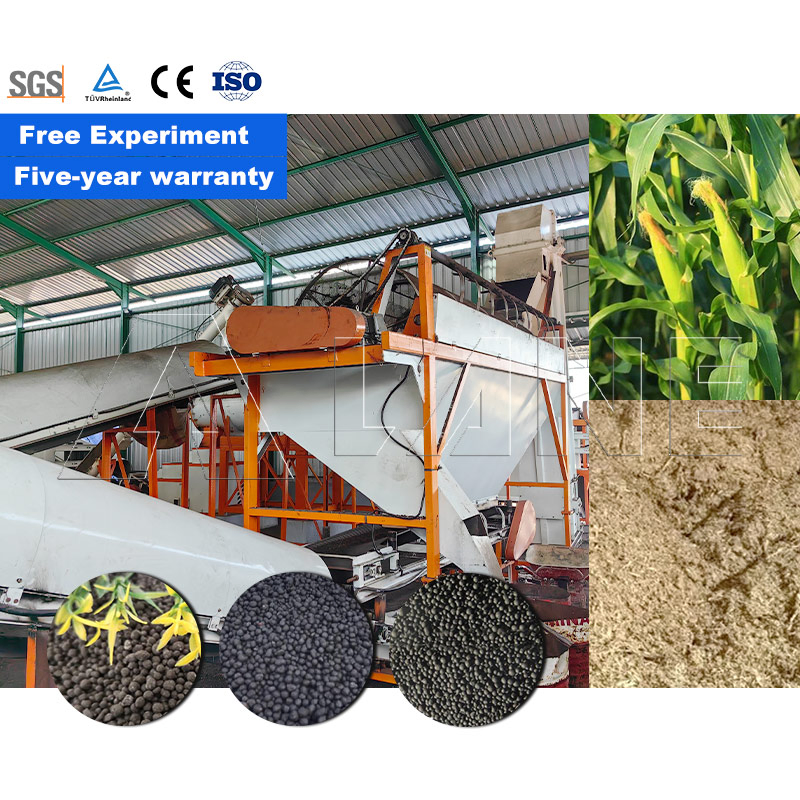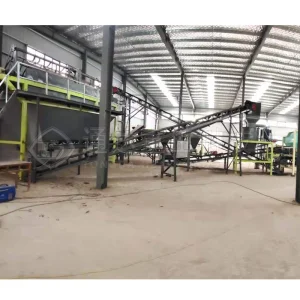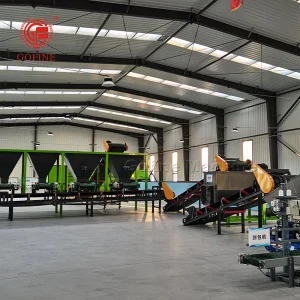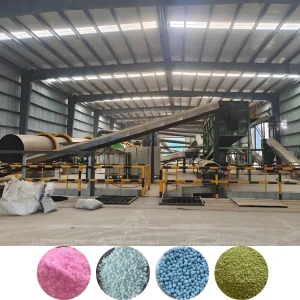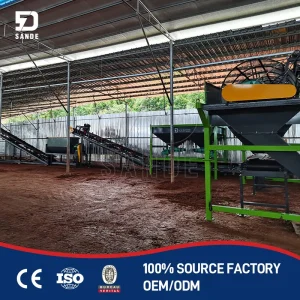
🌾 Applicable Industries
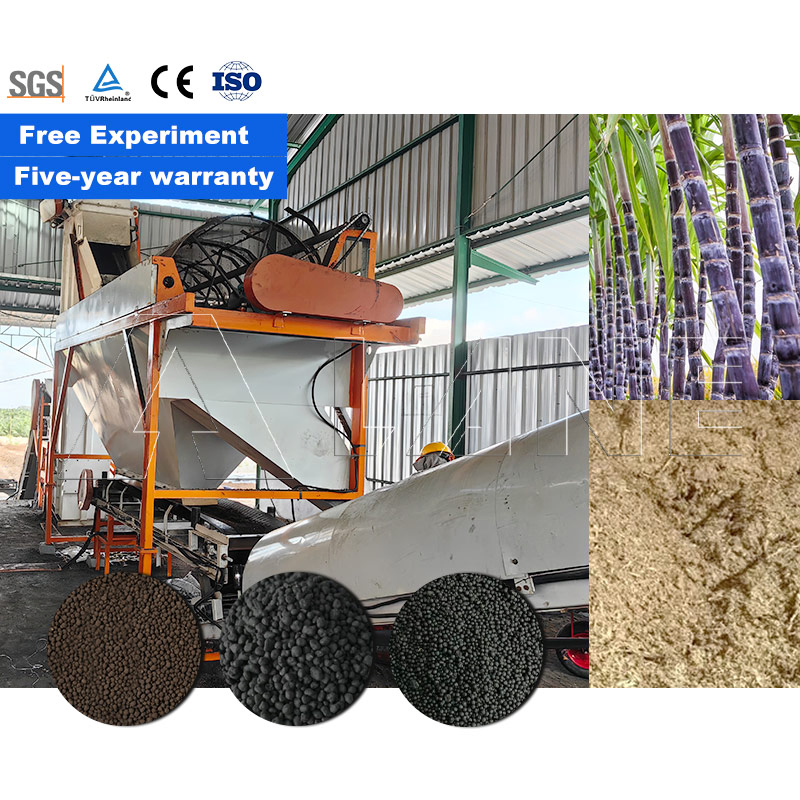
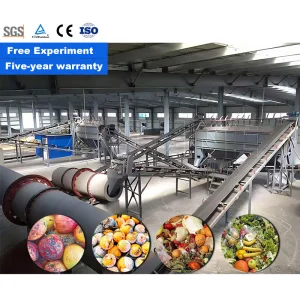
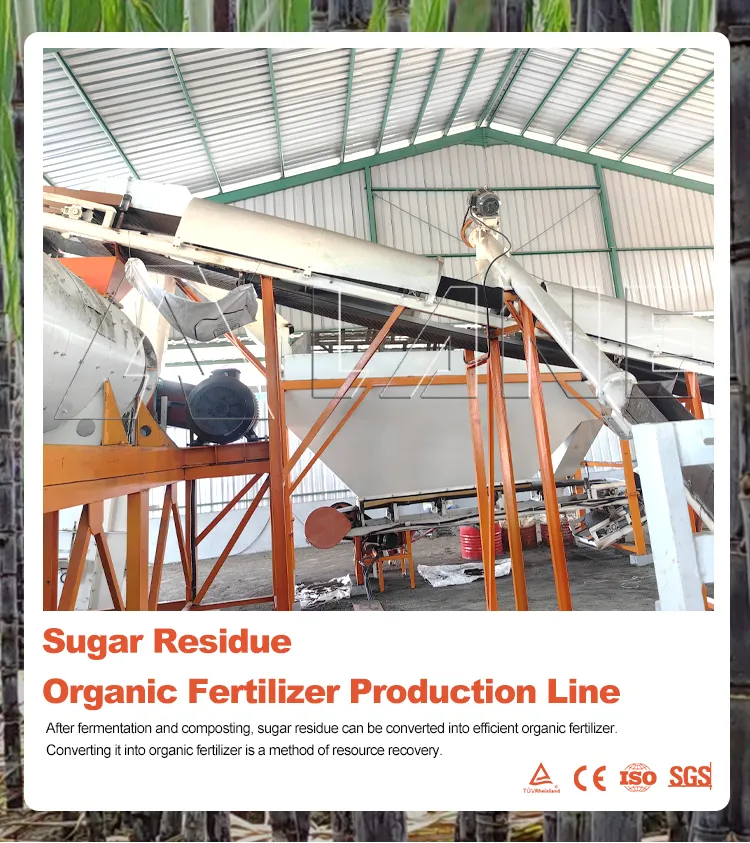
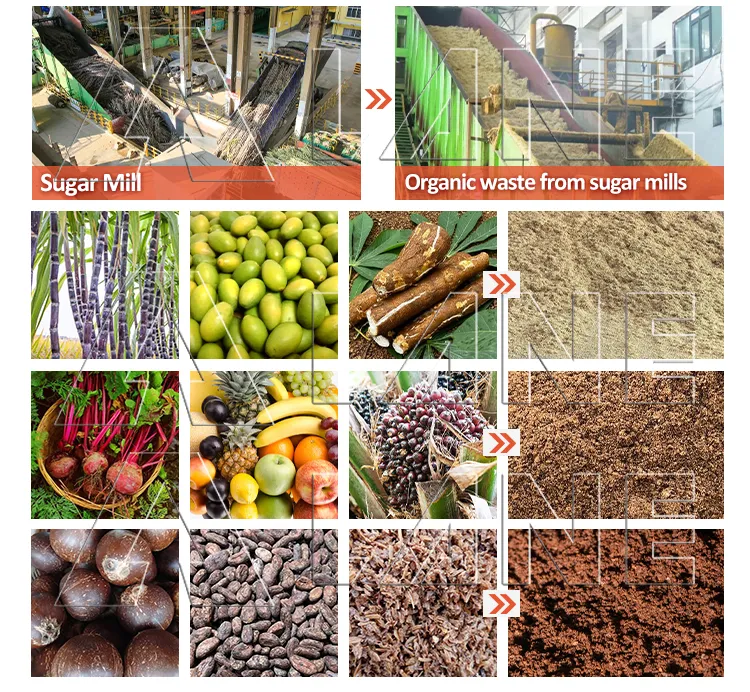
Various byproducts generated during the sugar production process from crops such as sugarcane and sugar beets—including filter mud, bagasse/beet pulp, and molasses—can be transformed into valuable resources through fermentation with other agricultural wastes like livestock manure. This process yields high-quality organic fertilizers that promote sustainable agricultural development.
⚙ How to Make Organic Fertilizer from Sugar Residue?
1
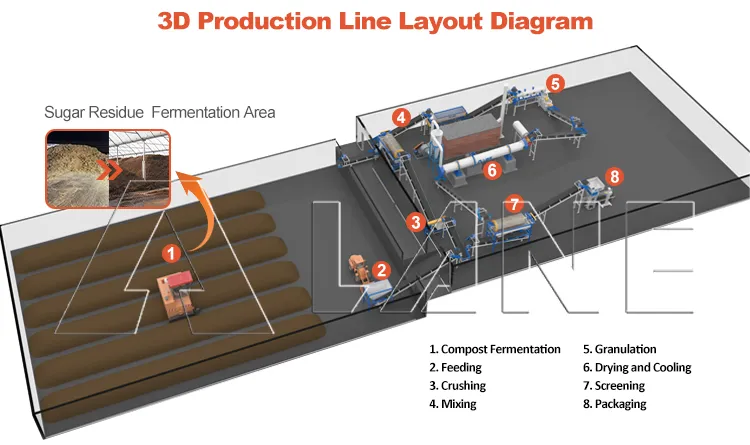
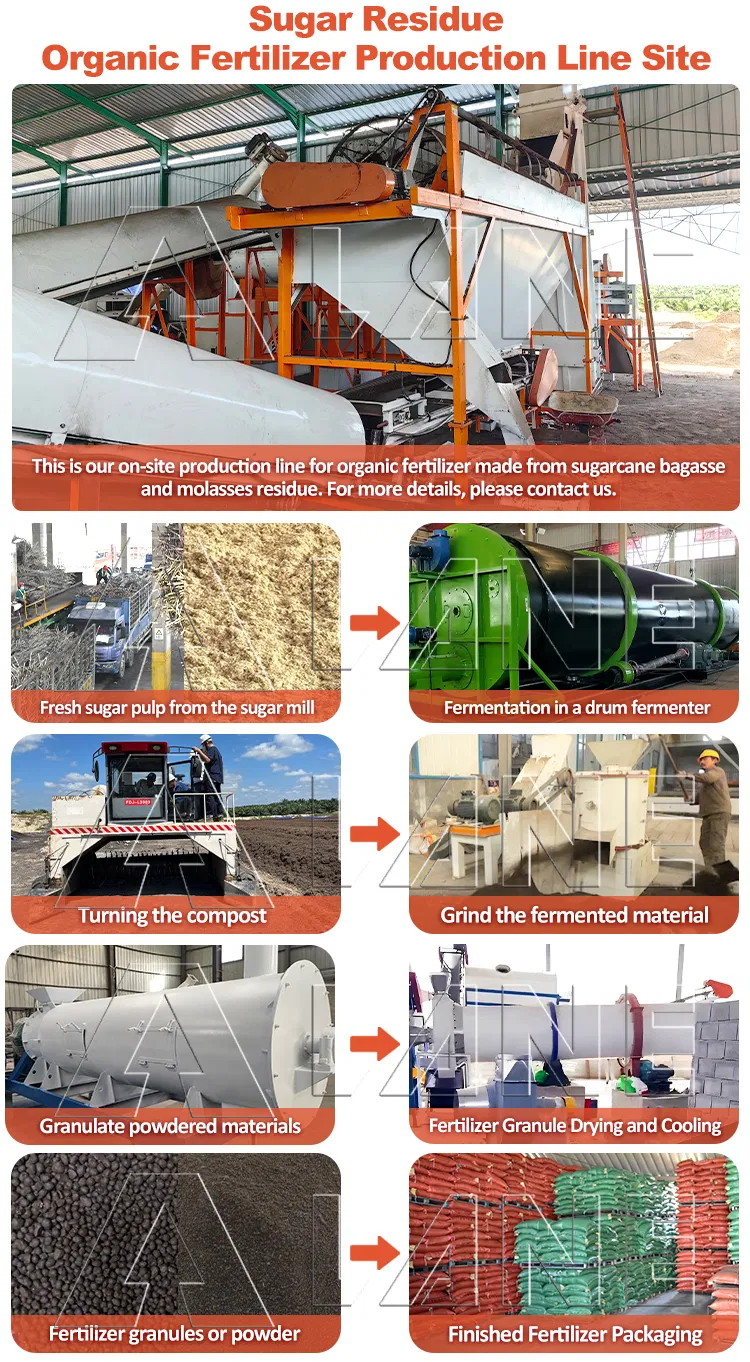
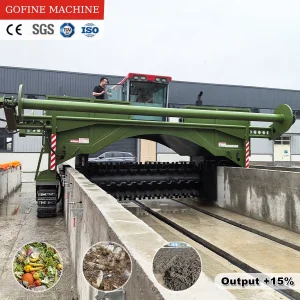
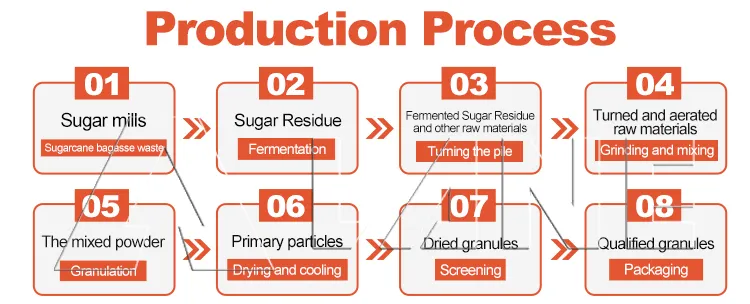
Composting Fermentation: Transport fresh sugar residue from sugar mills to the organic fertilizer production facility. Introduce fermentation bacteria, pile the mixed material into elongated heaps, and ferment using a turning machine.
2
Crushing: Fermented material may form clumps. Use a crusher to grind it into fine powder, preparing it for subsequent granulation.
3
Granulation: Feed the mixed powder into a granulator to form pellets.
| Name |
Capacity |
Granulation Process |
| Rotary drum granulator |
5-30 tons/h |
Wet material is granulated by rolling in an inclined rotating drum. |
| Stirring pin granulator |
4-12 tons/h |
The material is compressed through the interaction between the rotating paddles and the cylinder. |
| Double roller granulator |
1-8 tons/h |
Dry powder material is formed through a die under high pressure without drying. |
4
Drying and Cooling: Granulated pellets may retain high moisture content. Use a rotary drum dryer to reduce moisture, then cool to enhance pellet strength for storage.
5
Screening: The cooled pellets are graded using a drum screen. Pellets of the correct size proceed to the next stage. Excessively fine powder is returned to the granulator for regranulation, while oversized pellets are sent back to the pulverizer.
6
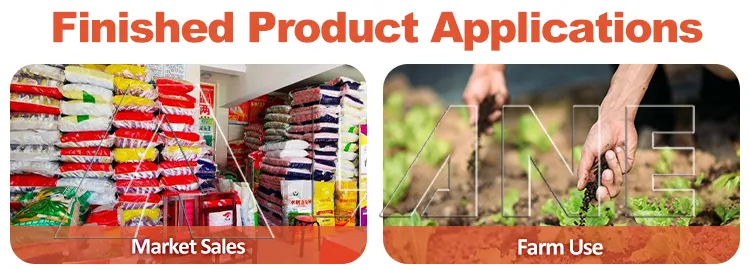
Packaging: Screened organic fertilizer granules are weighed using an automatic packaging scale, loaded into bags, and transported to storage.

❓ FAQ
Can I use this production line to produce multi granularity particles?
Yes, our production line is multifunctional. We can customize ring moulds of different sizes. In this way, you can easily adjust the size of your granules.
I know little about the fertilizer production line. How to choose the most suitable machine?
Just tell us your raw materials, capacity (tons / hour) and the size of the final particle product, and we will choose the machine for you according to your specific situation.
Our workers don't know how to operate the production line. What should I do?
Our engineers will instruct the site workers on how to install the machines and build the workshop, field test the production line, and provide training on operation.
Are you a trading company or a manufacturer?
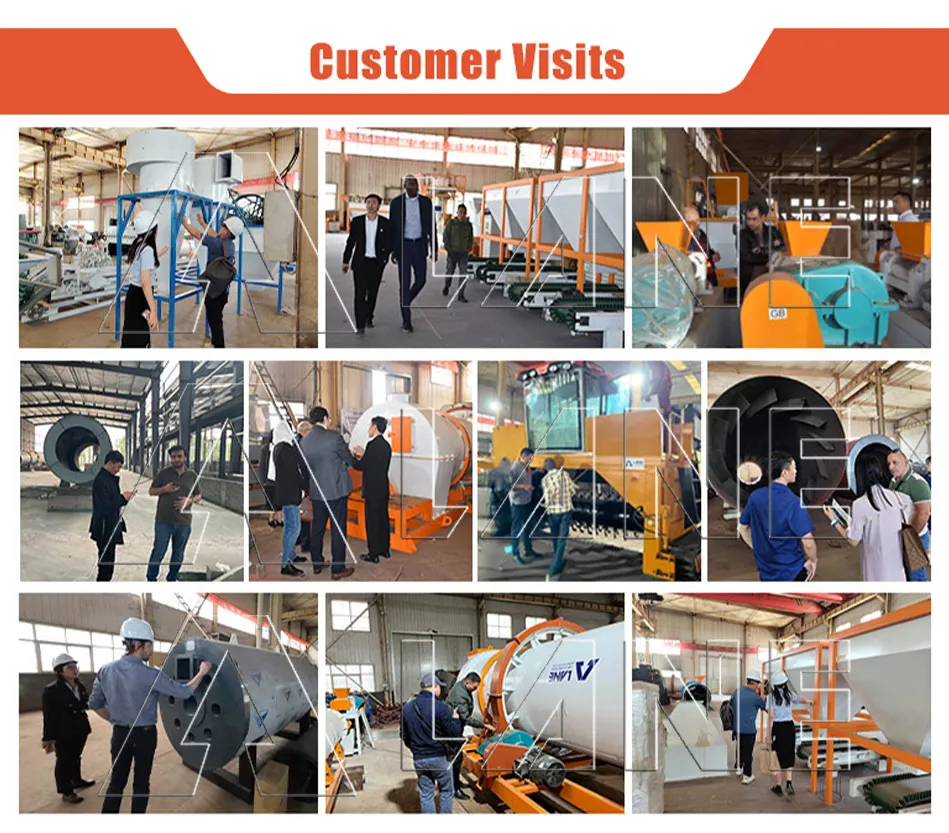
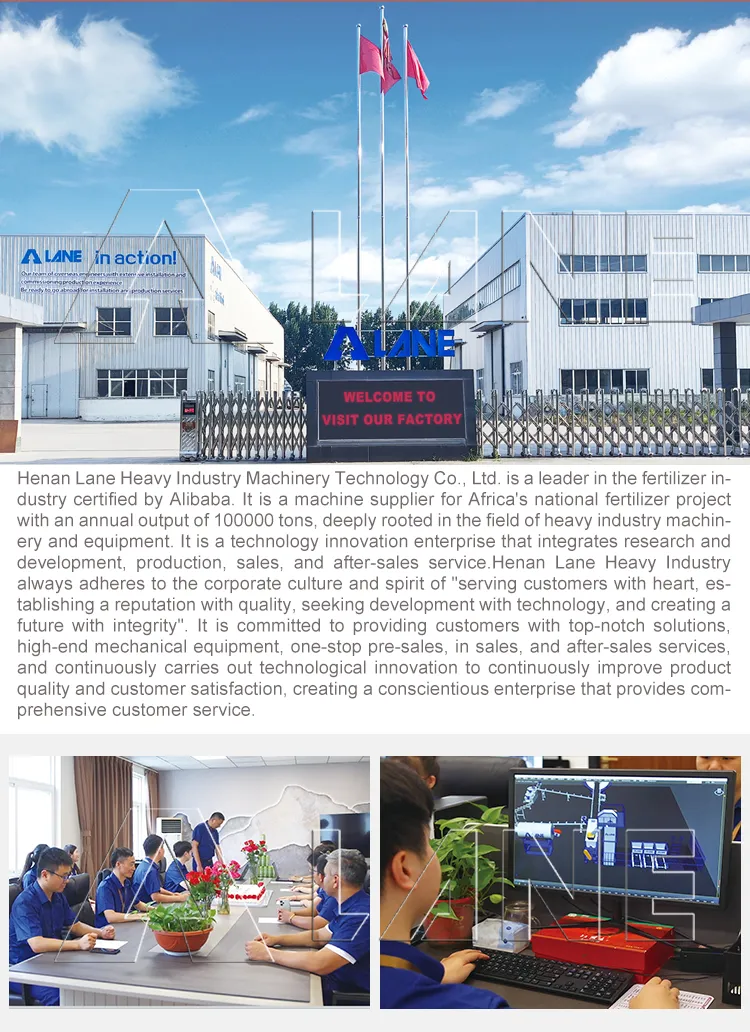
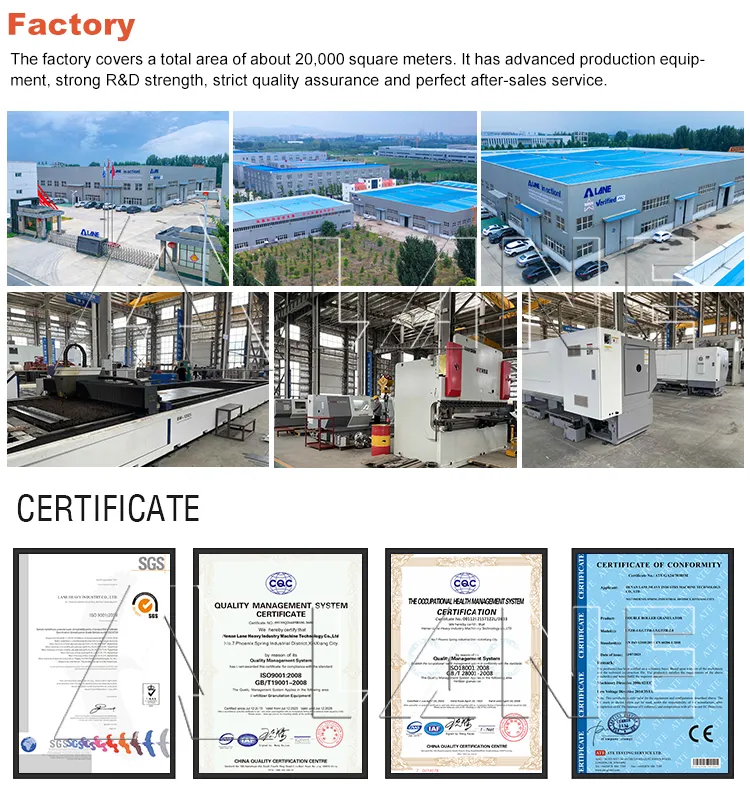
We have a large factory dedicated to production covering 10,000 square meters. You are welcome to visit our facility.
What's the Production Period of the Fertilizer Machine?
For single fertilizer machines, our production time is 7 days; for a complete fertilizer production line, our production time is no more than 30 days.
What's the Quality Guarantee and Certifications?
All of our machines have passed ISO and CE certification. We guarantee the highest quality and our warranty time is 5 years after the shipment date.
 AgBio Energy